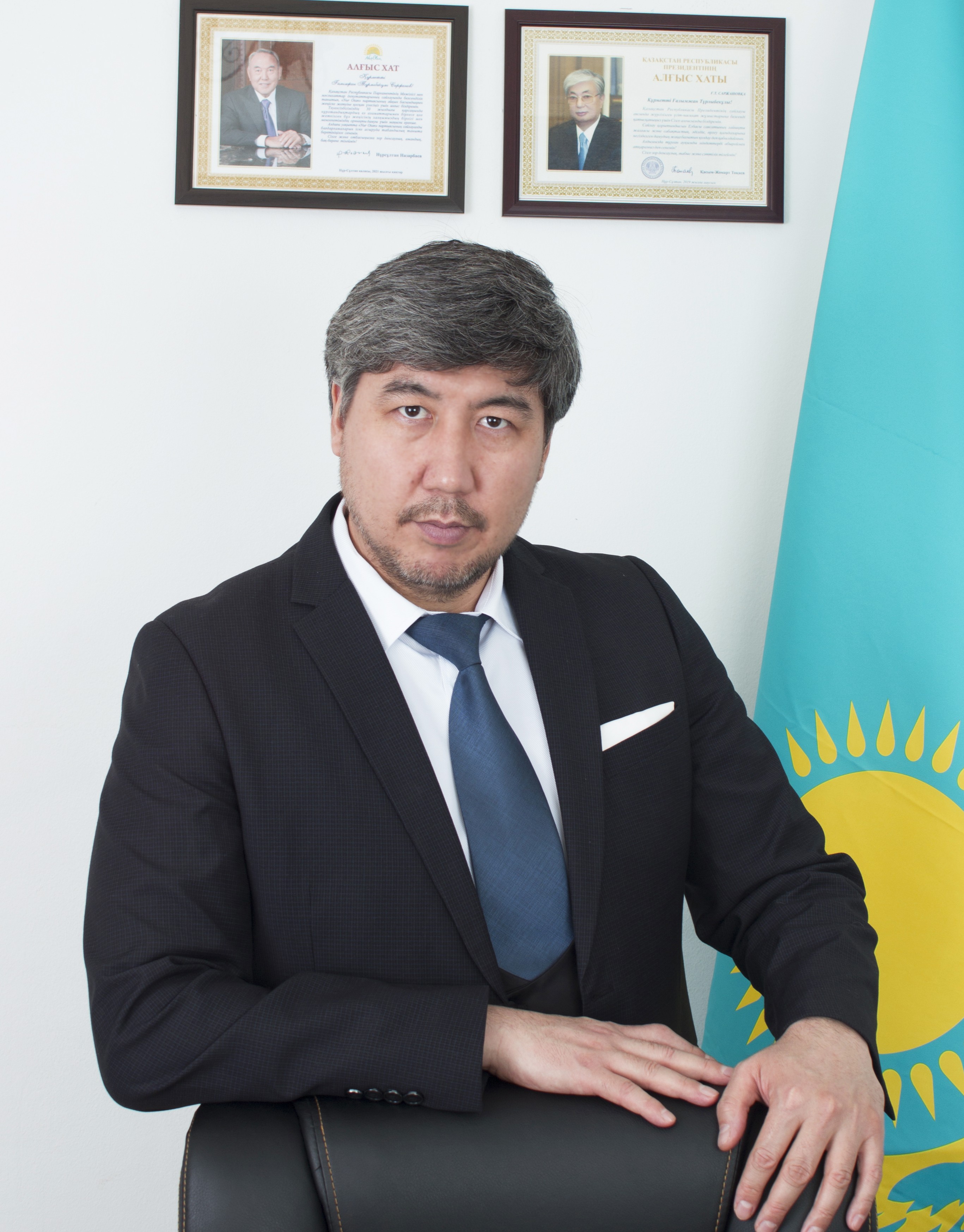
On signing an Agreement on Free Trade in Services, Establishment, Operation and Investment
Decree of the President of the Republic of Kazakhstan dated June 7, 2023 No. 245
In accordance with subparagraph 1) of Article 8 of the Law of the Republic of Kazakhstan "On International Treaties of the Republic of Kazakhstan", I HEREBY DECREE:
1. To approve the attached draft Agreement on Free Trade in Services, Establishment, Operation and Investment.
2. Prime Minister of the Republic of Kazakhstan Smailov Alikhan Askhanovich to sign on behalf of the Republic of Kazakhstan an Agreement on Free Trade in Services, Establishment, Activities and Investments, authorizing amendments and additions that are not fundamental, with the following caveat: "In the event of a claim arising from an alleged violation of Chapter 5 of this Agreement, to the Republic of Kazakhstan in accordance with subparagraph (a) of paragraph 5 of Article 36 "Settlement of disputes between a Party and an investor of the other Party" of this Agreement, instead of an arbitration court, the dispute is subject to consideration by the Court of the Astana International Financial Center (AIFC Court).
3. This Decree shall enter into force from the date of its signing.
President of the Republic of Kazakhstan
K. Tokaev
Approved by Decree of the President of the Republic of Kazakhstan on June 7, 2023 No. 245
Project
Agreements on free trade in services, establishment, operation and implementation of investments
The Member States of the Commonwealth of Independent States, hereinafter referred to as the Parties,
Having regard to the Free Trade Area Agreement of October 18, 2011,
Recognizing the need to further expand the scope of economic integration,
considering the growing importance of the service sector for the development of the economy,
Desiring to create conditions for the expansion of mutual trade in services and an increase in the level of its liberalization,
Desiring to create favorable conditions for investment by persons of one Party in the territories of other Parties,
Guided by the desire to continuously improve the standard of living of the population of their States,
Guided by generally recognized principles and norms of international law and based on the norms of the General Agreement on Trade in Services of April 15, 1994 (GATS), including Article V of the GATS,
Based on the fact that the provisions of this Agreement are aimed at developing trade in services, the establishment and operation of companies, as well as investment cooperation between the Parties,
We have agreed on the following:
Article 1 Definitions
The terms used in this Agreement mean the following:
The WTO is a World Trade Organization established in accordance with the Marrakesh Agreement establishing the World Trade Organization of April 15, 1994.;
The GATS is the 1994 General Agreement on Trade in Services, contained in Annex 1B to the Marrakesh Agreement establishing the World Trade Organization of April 15, 1994.
When using references in this Agreement to the provisions of the GATS or other international treaties concluded within the framework of the WTO, the terms "Contracting Party/Contracting Parties" or "member/members" contained therein are designated respectively by the Party/The Parties, as defined in the preamble of this Agreement;
activity - activities of a commercial or professional nature of legal entities, branches, representative offices specified in sub-paragraphs "a" - "b", and/or individuals specified in sub-paragraph "d" of the definition of the term "institution", including trade in services and production of goods and/or services, with the exception of activities carried out in the performance of functions of state power;
income - funds received from investments, including, but not limited to, profits, dividends, interest, capital gains, royalties and other remuneration;
legislation of the Party - laws and other regulatory legal acts of the Party;
investments are assets invested by an investor of one Party in the territory of the other Party in accordance with the legislation of the latter, which have the characteristics of investments, including such characteristics as a commitment to capital or other resources, expectations of profit and risk taking, including, but not limited to:
cash, securities, movable and immovable property;
business rights granted on the basis of the legislation of the Parties or under a contract, including, in particular, the rights to explore, develop, extract and exploit natural resources;
property and other rights with monetary value, including intellectual property rights.
The term "investment" does not include:
a) loans to a Party or a legal entity owned or controlled by the Party;
b) cash claims that arise solely from commercial contracts for the sale or lease of goods or services;
c) cash requirements that arise solely from the extension of a loan in connection with a commercial transaction, such as trade finance.
No change in the form of investments affects their qualification as investments, unless such a change contradicts the legislation of the Party in whose territory the investments were made.
The term "investment" includes investments made by investors of one Party in the territory of the other Party in the form of an institution, as defined and regulated by Chapter III "Establishment and activities" of this Agreement.;
An investor of a Party is any person of one of the Parties who has made or is making investments in the territory of the other Party.
The term "Party investor" does not include:
a) any natural person who is a national of the Party in whose territory the investments are made or have been made;
b) any natural person who was a national of the Party in whose territory the investments were made on the date when such investments were made;
c) any legal entity of a Party that is owned or controlled directly or indirectly by a person of the other Party;
d) any legal entity of a Party, if such legal entity does not carry out significant business activities in the territory of the other Party or if such legal entity is owned or controlled directly or indirectly by persons of a third State;
A third-country investor is any natural or legal person of a third country that is not a Party to this Agreement.;
individual entrepreneur is an individual of the Party registered as an individual entrepreneur in accordance with national legislation.;
An exclusive service provider is any person of the Party, public or private, who is officially authorized or actually established in the relevant service market of the Party as one of a small number of providers of such a service, and competition among such service providers in the territory of the Party is significantly limited;
licensing is the procedure and activities of the competent authorities established by the legislation of the Party for the provision, renewal and extension of validity, refusal, suspension and cancellation of licenses (permits);
person - any natural or legal person of the Parties;
A Party's measure is the legislation of a Party, as well as a decision, action or omission of a body or official of that Party, which are adopted at any level of government of that Party, by its local self-government bodies or organizations in the exercise of their powers delegated to them by such bodies.;
A Party's measure affecting trade in services includes measures in relation to:
1) purchase, payment and use of the service;
2) access to services and use in connection with the provision of services for which the Parties have established requirements for their wide supply to the public;
A Party's measure affecting the establishment and operation includes measures with respect to the establishment and operation of legal entities, branches, representative offices and individual entrepreneurs of one Party to this Agreement in the territory of any of the other Parties to this Agreement.;
A monopoly service provider is any person of the Party, public or private, who is officially authorized or actually established in the relevant service market of the Party as the sole provider of such a service in the territory of the Party.;
service provider - any person of the Party who provides the service;
service consumer - any person of the Party who receives or uses the service;
A permit is a confirmation by the competent authority of the Party of a person's right to trade in services, establish and operate, provided for by the legislation of the Party.;
freely used currency - means a freely used currency as defined by the International Monetary Fund in accordance with the articles of the IMF Agreement;
The service sector is defined and classified on the basis of the International Classification of Basic Products, approved by the Statistical Commission of the United Nations Secretariat (Central Products Classification) in 1991, and means:
3) with respect to an individual obligation, one or more, or all subsectors of this service, as specified in the list of the Party;
6) in other respects, the entire sector of this service, including all its subsectors;
Articles of Agreement of the IMF - articles of Agreement of the International Monetary Fund dated July 22, 1944;
The territory of a Party is the territory of a Party, as well as its territories, in respect of which it exercises sovereign rights and jurisdiction in accordance with international law and its legislation.;
The economic feasibility test is the issuance of a permit to establish, operate, or trade in services, depending on the need and the needs of the market, by economically evaluating the effectiveness of the service provider's activities in accordance with the goals of economic planning for a particular industry or the interests of the national labor market, if this is provided for by the national legislation of the Parties. Compliance with the interests of the national labor market is determined by checking the absence of individuals from the Party who meet the requirements of the service provider.;
trade in services is the supply of services, including production, distribution, marketing, sale, and delivery of services and carried out in the following ways:
a) from the territory of one Party to the territory of any other Party;
b) on the territory of one Party to the consumer of the services of any other Party;
c) the service provider of one Party through the presence of natural persons of the Party in the territory of any other Party;
A service provided in the performance of government functions is any service that is provided on a non-commercial basis and not in competition with one or more service providers.;
services include any service in any sector, with the exception of services provided in the performance of government functions;
institution:
a) creation, organization and (or) acquisition of a legal entity (participation in the capital of an established or established legal entity) of any organizational and legal form and form of ownership provided for in accordance with the legislation of the Party in whose territory such a legal entity is created;
b) the acquisition of control over a legal entity by a Party, which is expressed in obtaining the opportunity, directly or through third parties, to determine and/or influence decisions made by such a legal entity, including by disposing of votes attributable to voting shares (stakes), through participation in the governing bodies of such a legal entity (including the board of directors, the supervisory board the Council and other governing bodies); or
c) establishment of a branch or opening of a representative office in accordance with the legislation of the Parties;
d) registration as an individual entrepreneur in accordance with the legislation of the Parties;
e) an individual is a citizen of a Party in accordance with its legislation.;
A legal entity is an organization established or incorporated in the territory of a Party in any organizational and legal form in accordance with the legislation of that Party.
Other terms and definitions used in the individual lists of the Parties are determined in accordance with the national legislation of the relevant Party.
CHAPTER I General obligations
Article 2 Internal regulation
1. For the purposes of this article, measures by the Parties affecting trade in services, establishment and activities in sectors and activities are understood as licensing requirements and procedures, as well as qualification requirements and procedures.
2. With respect to measures of the Parties affecting trade in services, establishment and activities in sectors and types of activities for which obligations have been accepted or there are no exemptions in accordance with the individual lists of the Parties in Annexes B, C and D to this Agreement.:
(a) Each Party shall ensure that any measures of that Party affecting trade in services, establishment and activities are applied in a reasonable, objective and impartial manner;
b) when a permit for trade in services, establishment and activity is required, the competent authorities of the Party, within a reasonable period of time after submitting the application, which is considered to be executed in accordance with the requirements of the legislation of this Party, inform the applicant of the decision on the application. At the request of the applicant, the competent authorities of the Party shall provide information on the progress of the examination of the application within a reasonable time and no later than the time provided for by national legislation.;
c) The Parties shall not apply licensing or qualification requirements that nullify or reduce benefits that are provided in accordance with the terms and conditions included in Annexes B and C to this Agreement in a manner that:
It is not based on objective and transparent criteria such as competence and ability to deliver a service;
in the case of licensing procedures, it was not in itself a restriction on the provision of services.;
it was not more burdensome than necessary to ensure the quality of the service.
If, in accordance with the individual lists of the Parties, Annexes B and C to this Agreement include obligations (no exceptions) regarding professional services, each Party shall carry out procedures in accordance with its legislation to verify the competence of professionals of any other Party.
3. With regard to measures by Parties affecting trade in services, institutions and activities:
3.1. If a Party applies licensing procedures and requirements (licensing procedures), then such Party ensures that:
a) the names of the competent authorities responsible for issuing licenses (permits) for carrying out activities have been published or otherwise made publicly available;
b) licensing (permitting) procedures should not in themselves be a restriction on trade in services, establishment and activity, and licensing (licensing) requirements directly related to the right to trade in services or conduct activities should not in themselves be an unreasonable barrier to trade in services or activities;
c) all licensing procedures and requirements have been established in the legislation and the legislation establishing or applying licensing procedures or requirements has been published in advance, but not later than its entry into force (entry into force) in accordance with the provisions of Article 4 of this Agreement;
d) the competent authorities decided to issue (refuse to issue) a license (permit) within the time period specified in the relevant legislative act, and any fees charged in connection with the submission and consideration of an application for a license (permit) would comply with the law and would not in themselves constitute a restriction on trade in services., institutions and activities and were based on the costs of the authorized body for issuing (refusing to issue) a license (permit) related to the consideration of the application and the issuance of a license (permit), with the exception of royalties for the use of the radio frequency spectrum and numbering resources, the amount of which is determined by national legislation.;
e) after the expiration of the time period specified in subparagraph (d) of this paragraph, and at the request of the applicant, the relevant competent authority of the Party informed the applicant of the status of consideration of his application, as well as whether this application is considered to be properly completed. In any case, the applicant will be given the opportunity to make technical corrections to the application. The application will not be considered properly completed until all the information and documents specified in the relevant legislative act of the Party have been received.;
f) at the written request of the applicant, who was refused admission to the application, the competent authority, which refused to accept the application, informed the applicant in writing about the reasons for such refusal. However, this provision should not be interpreted as requiring the competent authority to disclose information, the disclosure of which impedes the enforcement of the law or otherwise contradicts the public interest or essential security interests.;
g) if the application was refused, the applicant could submit a new application for a license (permit) or make changes to the old application, which would eliminate any existing problems for the issuance of a license (permit).
3.2. Each Party maintains or establishes, as soon as practicable, judicial, arbitration or administrative authorities or procedures that, at the request of the service provider or the person whose interests are affected, ensure the prompt review and, where justified, proper correction of administrative decisions affecting trade in services, establishment and activities. In cases where these procedures are not independent of the body authorized to make such administrative decisions, the Party shall ensure an objective and impartial consideration of these issues within the framework of such procedures.
4. The specifics of regulation in the field of financial services are provided for in Annex D to this Agreement.
5. The specifics of regulation in the field of telecommunications services are provided for in Annex E to this Agreement.
Article 3recognition
1. In order to meet their respective standards or criteria regarding permits, licensing or certification of service providers, as well as institutions and activities, each Party is required to give due consideration to any requests from the other Party for recognition of education or experience received, compliance with the requirements of the licenses (permits) or certificates provided by the other Party. Such recognition may be carried out on the basis of an agreement or arrangement with the other Party, or provided unilaterally by decision of the Party.
2. When a Party, on the basis of an agreement or arrangement, recognizes the education or experience gained, compliance with requirements, or licenses (permits) and certificates obtained in the territory of a third Party, such first Party must provide any other Party with the opportunity to negotiate its accession to such agreement or arrangement or the opportunity to negotiate the conclusion of comparable agreements or arrangements. If a Party carries out recognition unilaterally, it provides any other Party with an appropriate opportunity to show that the education, experience, licenses (permits) and certificates received on its territory must be recognized in accordance with the legislation of the Parties.
3. Recognition should be provided in such a way that it does not become a means of discrimination between the Parties in the application of standards or criteria for permits, licensing or certification of service providers, or hidden restrictions on trade in services, as well as in relation to institutions and activities.
Article 4transparentness
1. Each Party shall ensure that its legislative acts and international agreements to which it is a party and which affect or may affect the issues covered by this Agreement are published in an official source and/or on an Internet site designated by the Party in such a way that any person whose rights and/or obligations may be affected The Parties had the opportunity to familiarize themselves with such legislative acts and international agreements.
2. The legislative acts referred to in paragraph 1 of this article must be published without delay within a period ensuring legal certainty and reasonable expectations of persons whose rights and (or) obligations may be affected by this legislation, but in any case not later than the date of its entry into force (entry into force).
In the event that such publication is practically impracticable, the legislative acts referred to in paragraph 1 of this article shall be made publicly available in another way provided for by national legislation.
3. Each Party shall ensure the provision of responses to written requests from any person regarding the current and/or planned legislative act on issues covered by this Agreement. Responses to requests must be provided to such an interested person in accordance with the national legislation of the Party, but no later than 30 working days after receipt of the written request. In exceptional cases, the Party notifies the interested party of the extension of the deadline.
Article 5 Disclosure of confidential information
1. Nothing in this Agreement requires any Party to provide confidential information, the disclosure of which could impede its application of national legislation or otherwise be contrary to the public interest, or would damage the legitimate commercial interests of individual legal entities and individual entrepreneurs.
2. Disclosure of confidential information in the field of financial services is regulated by Appendix D to this Agreement.
Article 6trust and exclusive service providers
1. Each Party shall ensure that any monopolistic service provider does not act in a manner inconsistent with the obligations of this Party under Chapters II, III, IV of this Agreement when providing services and (or) carrying out other monopolistic activities in the relevant market.
2. If a legal entity that is a monopoly service provider in the territory of one Party competes directly or through a legal entity controlled by it outside the scope of its monopoly rights with persons of other Parties, the first Party ensures that such a legal entity does not abuse its monopoly position by acting in the territory of the first Party in a manner inconsistent with the obligations of such Party. the first Party under this Agreement.
3. The provisions of this article shall also apply to exclusive service providers.
Article 7The principle of equality
1. If persons in whose capital this Party participates or who are controlled by this Party remain in the territory of a Party, such Party shall ensure that the said persons:
a) carried out their activities based on commercial considerations, including price, quality, availability of services or goods, their marketability, transportation conditions and other conditions of purchase, sale or delivery, and acted in the relations regulated by this Agreement:
on the basis of the principle of equality with other participants in these relations;
based on the principle of non-discrimination of other participants in these relations, depending on their nationality, place of registration (institution), organizational and legal form or form of ownership; and
b) did not receive rights, privileges or obligations solely by virtue of this Party's participation in their capital or control over them by this Party,
except in cases when the activities of such persons, in whose capital the state participates, or state-controlled persons are aimed at solving social policy tasks.,
and also with the exception of the cases specified in the individual lists of the Parties in Annexes B and C to this Agreement.
2. The provisions of paragraph 1 of this Article shall also apply to persons formally or actually endowed with exclusive rights, with the exception of persons endowed with exclusive rights and included on the basis of subparagraphs "b" and "c" of paragraph 1 of Article 21 of this Agreement in the individual lists of the Parties in Annexes B and C to this Agreement, and persons who having monopoly rights in accordance with paragraph 1 of Article 6 of this Agreement.
3. Each Party shall ensure that all its bodies at any level of state power or local self-government are independent, uncontrolled and unaccountable to any person engaged in economic activity in the economic sector, the regulation of which falls within the competence of the relevant body. The measures of the Party, including the decisions of the body specified in this paragraph, the rules and procedures established and applied by it, must be impartial and objective in relation to all persons engaged in business activities.
4. The provisions of this article do not apply to public procurement and services provided in the performance of public authority functions.
Article 8 Restrictions or prohibitions
1. If one of the Parties maintains restrictions or prohibitions on the establishment, activity, trade in services or investment in relation to a third State, nothing in this Agreement shall be interpreted as obliging such Party to extend the provisions of this Agreement to persons of the other Party, if such person is wholly owned or controlled by a person of the said third State, and the dissemination of the provisions this Agreement will lead to circumvention or violation of the above prohibitions and restrictions.
2. A Party may not extend its obligations assumed by it under this Agreement to persons of the other Party with respect to establishment, activity, trade in services or investment, if such person of the other Party does not carry out significant business operations in the territory of such other Party and it is owned or controlled by a person of the first Party or a person of the State that is not a Party to this Agreement.
Article 9 General exceptions
Provided that such measures are not applied in a manner that creates arbitrary or unjustifiable discrimination between States or hidden restrictions on trade in services, establishment and activity, and investment, nothing in this Agreement prevents any Party from taking or applying measures.:
a) necessary to protect public morals or maintain public order. Exceptions for reasons of public order can be applied only in cases where there is a real and sufficiently serious threat to one of the fundamental interests of society.;
b) necessary to protect the life or health of people, animals or plants;
c) necessary to comply with the laws of the Parties that do not contradict the provisions of this Agreement, including those related to the prevention of misleading and unfair practices or the consequences of non-compliance with civil law contracts;
protection against interference in the privacy of individuals during the processing and dissemination of personal information and protection of the confidentiality of information about personal life and bank accounts;
safety;
d) incompatible with Articles 15, 20, 25 and 30 of this Agreement, provided that these measures are aimed at non-discriminatory taxation of persons of the other Party in relation to trade in services, institutions and activities.
Article 10Exclusions for security reasons
1. Nothing in this Agreement shall be interpreted as an obstacle for any Party to take any actions that it considers necessary to protect its most important interests in the field of national defense or State security.:
a) related to the supply of services or goods carried out directly or indirectly for the purpose of supplying the armed forces;
b) related to nuclear or thermonuclear munitions or the materials from which they are obtained;
c) adopted in wartime or other emergency circumstances in international relations.
2. Nothing in this Agreement should be interpreted as a requirement to provide any information, the disclosure of which the Party considers to be contrary to the most important interests of its security.
3. Nothing in this Agreement shall be interpreted as an obstacle for any Party to take any action to fulfill its obligations under the UN Charter for the maintenance or restoration of international peace and security.
Article 11 Restrictions to protect the balance of payments
1. In the event of a significant deterioration in the balance of payments, external financial difficulties, a significant reduction in gold and foreign exchange reserves, sharp fluctuations in the national currency or the threat of this, the Party may accept and apply restrictions on transfers and payments.
2. The restrictions specified in paragraph 1 of this Article:
a) should not create discrimination between the Parties;
b) must comply with the articles of the IMF Agreement;
c) must not unduly prejudice the commercial, economic and financial interests of any other Party;
d) should not be more burdensome than is necessary to overcome the circumstances specified in paragraph 1 of this article.;
e) should be temporary and gradually eliminated as the circumstances specified in paragraph 1 of this article disappear.
3. In determining the scope of such restrictions, the Parties may give preference to the sectors of the economy that are more important for their economic or development programs. However, such restrictions are not established or maintained in order to protect a particular sector of the economy.
4. Any restrictions imposed by a Party in accordance with paragraph 1 of this Article and any changes thereto shall be the subject of immediate notification to the other Parties and the CIS Executive Committee no later than 15 calendar days from the date of introduction/modification of such restrictions.
Article 12payments and transfers
5. 3a With the exception of the circumstances provided for in Article 11 of this Agreement, the Parties shall not apply restrictions on international transfers and payments for current transactions related to their individual lists of obligations.
6. Nothing in this Agreement affects the rights and obligations of the Parties - members of the International Monetary Fund in accordance with the articles of the IMF Agreement, including the conduct of currency transactions that are compatible with the articles of the IMF Agreement, provided that the Party does not impose restrictions on any capital transactions incompatible with its individual obligations related to such transactions, except as provided in article 11 of this Agreement, or at the request of the International Monetary Fund.
CHAPTER IITRANS-border trade in services
Article 13 Scope of application
1. The provisions of this Chapter shall apply to measures of the Parties affecting cross-border trade in services.:
a) from the territory of one Party to the territory of any other Party;
b) on the territory of one Party to the consumer of the services of any other Party.
2. The provisions of this chapter shall not apply.:
a) measures affecting the rights of carriage by air, in whatever form they may be presented, and (or) services directly related to the rights of carriage by air, except:
repair and operational (technical) maintenance of aircraft;
sales and marketing of air transport services;
computer reservation system services;
b) public procurement, understood in accordance with Article XIII of the GATS;
c) services provided in the performance of public authority functions;
d) subsidies and other forms of state and municipal support.
3. The specifics of regulation in the field of financial services are provided for in Annex D to this Agreement.
4. The specifics of regulation in the field of telecommunications services are provided for in Annex E to this Agreement.
Article 14 Most-favored-nation regime
1. With respect to any measure covered by this Chapter, each Party to this Agreement shall provide the services and service providers of any other Party to this Agreement with treatment no less favorable than that which it provides to similar services and service providers of any State not party to this Agreement, except for the measures provided for in the individual list of such Party in Annex A to this Agreement.
2. The provisions of this Agreement do not prevent the Parties from providing advantages to neighboring countries in order to facilitate cross-border trade in services that are produced and consumed locally in the territories of each Party adjacent to the borders.
3. No provisions of this Agreement imply the obligation of a Party to provide the services and/or service providers of other Parties with benefits or advantages that such a Party provides or will provide:
(a) In accordance with such Party's agreements on economic integration, free trade in services, enhanced partnership and cooperation, etc., in accordance with the requirements of Article V of the GATS; or
b) on the basis of agreements on the avoidance of double taxation or other arrangements on tax matters.
Article 15 National regime
1. In the sectors provided for by the individual lists of the Parties in Annex B to this Agreement, and in accordance with the conditions and restrictions stipulated therein, each Party shall provide services and service providers of any other Party with treatment no less favorable than that which it provides to its customers in respect of any measures affecting cross-border trade in services. own similar services and service providers.
2. The Parties may comply with the requirements of paragraph 1 of this Article by providing the services and service providers of any other Party with either formally the same (similar) treatment, or formally a different (different) treatment in relation to the regime provided to their own similar services or service providers.
3. Formally, the same (similar) regime or formally different regime is considered less favorable if it changes the conditions of competition in favor of the services or service providers of this Party in comparison with similar services or service providers of any other Party.
Article 16 Entry to the market
In the sectors provided for by the individual lists of the Parties in Annex B to this Agreement, and in accordance with the conditions and restrictions stipulated therein, none of the Parties applies or introduces in relation to services and (or) service providers of the other Party in connection with cross-border trade in services.:
a) restrictions on the number of service providers in the form of quantitative quotas, monopolies, exclusive service providers, or requirements to confirm an economic feasibility test;
b) restrictions on the total number of transactions for the supply of services of any service provider or the total volume of production of services, expressed in the form of established quantitative units of measurement in the form of a quota, an economic feasibility test, or any other quantitative form;
c) restrictions on the total value of transactions on services or assets in the form of quantitative quotas or requirements of the economic feasibility test;
d) requirements regarding the institution, as well as the organizational and legal form of the institution.
If a Party commits to market access in relation to the supply of a service from the territory of one Party to the territory of the other Party and if the cross-border movement of capital is an essential part of the service itself, then such Party undertakes to allow the specified movement of capital in this regard.
Article 17 Additional obligations
Measures that are not subject to inclusion in the lists of obligations in accordance with Articles 15 and 16 of this Agreement, including those related to qualifications, standards and licensing, are included in the individual lists of the Parties in the "Additional obligations" section of Annex B to this Agreement.
CHAPTER III Institution and activity
Article 18 Scope of application
1. The provisions of this chapter shall apply to:
a) any measures of a Party affecting the establishment in the territory of that Party by persons of the other Party;
b) any measures of the Party affecting the activities of legal entities, branches, representative offices established (established, opened) on the territory of this Party by persons of the other Party, individuals of the other Party registered as individual entrepreneurs on the territory of the other Party, on the date and after the entry into force of this Agreement.
2. The provisions of this Chapter shall not apply in the territory of the Party.:
a) public procurement, understood in accordance with Article XIII of the GATS, and activities that, in accordance with the legislation of this Party, are related to the performance of public authority functions;
b) subsidies and other forms of state and municipal support.
3. The provisions of this Chapter shall not apply in the territory of a Party to measures affecting the rights of carriage by air, in whatever form they may be presented, and (or) services directly related to the rights of carriage by air, except:
repair and operational (technical) maintenance of aircraft;
sales and marketing of air transport services;
computer reservation system services.
4. The specifics of regulation in the field of financial services are provided for in Annex D to this Agreement.
5. The specifics of regulation in the field of telecommunications services are provided for in Annex E to this Agreement.
Article 19 Most-favored-nation regime
1. With respect to any measure covered by this Chapter, each Party shall immediately and unconditionally grant to persons of any other Party treatment no less favourable than that which it grants to persons of any State not party to this Agreement, with the exception of measures provided for in the individual list of each Party in the annex. And to the present Agreement.
2. The provisions of this Agreement do not prevent the Parties from providing advantages in relation to neighboring countries in order to facilitate the establishment and (or) activities within such territories within the border territories.
3. No provisions of this Agreement imply the obligation of a Party to provide benefits or advantages to persons of other Parties in relation to the establishment and activities that such a Party provides or will provide.:
(a) In accordance with such Party's agreements on economic integration, free trade in services, enhanced partnership and cooperation, etc., in accordance with the requirements of Article V of the GATS; or
b) on the basis of agreements on the avoidance of double taxation or other arrangements on tax matters.
Article 20 National regime
1. Each Party shall provide persons of any other Party with a regime no less favorable in relation to the establishment and (or) activities than the regime provided to its persons on its territory, subject to the restrictions and conditions provided for in the individual list of each of the Parties in Annex B to this Agreement.
2. The Parties may comply with the requirements of paragraph 1 of this Article by providing persons of any other Party with either formally the same (similar) regime, or formally a different (different) regime in relation to the regime provided to their own persons.
3. Formally, the same (similar) regime or formally a different (different) regime is considered less favorable if it changes the conditions of competition in favor of persons of this Party in comparison with persons of any other Party.
Article 21 Restrictions on market access during establishment and activity
Subject to the restrictions and conditions provided for in the individual list for each of the Parties in Annex B to this Agreement, none of the Parties applies or imposes restrictions on persons of any other Party in connection with the establishment and (or) activities in terms of:
a) the forms of the institution, including the organizational and legal form, of a legal entity and an individual;
b) the number of legal entities to be established, branches or representative offices, registered individual entrepreneurs;
c) the volume acquired, the share in the capital of the legal entity, or the degree of control over the legal entity;
d) transactions/operations of an established legal entity, branch, representative office, or registered individual entrepreneur in the course of their activities in the form of a quota, economic feasibility test, or any other quantitative form;
e) restrictions on the total number of individuals who can be employed by the legal entity being established or who are necessary and directly related to the activity in the form of quotas or an economic feasibility test.
If a Party commits to market access in relation to the supply of services by a service provider of one Party by establishing in the territory of the other Party, it undertakes in this regard to allow the appropriate transfer of capital to its territory.
Article 22legalization of documents
The Parties do not require the legalization or apostillation of documents submitted to the registering authority of the state authority of the Party when establishing legal entities, branches or representative offices with the participation of persons of any other Party.
CHAPTER IV Special features of the temporary presence of individuals
Article 23 Scope of application
1. This chapter applies to measures affecting the temporary entry and stay of categories of natural persons of one Party in the territories of other Parties specified in the individual lists of the Parties in Annex D to this Agreement for the purposes of trade in services, establishment, activity and investment.
2. The provisions of this Chapter shall not apply in the territory of the Party to subsidies and other forms of state and municipal support.
3. The provisions of this Agreement shall not prevent the Parties from applying measures to regulate the entry of individuals into their territory or their temporary stay in the territory, including those measures necessary to protect the integrity of its borders and ensure the orderly movement of individuals across the border, provided that such measures are not applied in such a way as to nullify or reduce benefits received by either Party in accordance with the conditions established by the individual list in Annex D to this Agreement.
4. The provisions of this Agreement do not apply to the entry or stay of individuals of one Party in the territory of the other Party for the purpose of accessing the employment market of individuals of the Parties, permanent residence, obtaining a residence permit or citizenship, the requirements or procedures for issuing visas to individuals of the other Party, as well as permanent employment.
Article 24The most-favored-nation regime
5. With respect to any measure covered by this Chapter, each Party shall grant to the categories of natural persons referred to in paragraph 1 of Article 23 of this Agreement treatment no less favourable than that which it grants to similar categories of natural persons of any State not party to this Agreement.
6. A Party may apply measures that do not comply with paragraph 1 of this Article, if such measures are provided for in the individual list of such Party in Annex A to this Agreement.
7. The provisions of this Agreement do not prevent the Parties from providing advantages to neighboring countries in order to facilitate cross-border trade in services that are produced and consumed locally in the territories of the Parties adjacent to the borders, as well as for investments.
8. The treatment provided in accordance with paragraph 1 of this Article does not apply to benefits that a Party provides or will provide in the future.:
(a) In accordance with such Party's agreements on economic integration, free trade in services and other similar arrangements, if they meet the criteria and conditions of Article V of the GATS; or
b) on the basis of agreements on the avoidance of double taxation or other agreements on taxation issues.
Article 25 National regime
1. With respect to any measure covered by this chapter, in the sectors provided for in the individual lists of the Parties in Annex D to this Agreement, and in accordance with the conditions and restrictions specified therein, each Party shall grant treatment to the categories of natural persons of the other Parties specified in paragraph 1 of Article 23 of this Agreement, no less favorable than that the regime it provides to similar categories of its own individuals.
2. The Parties may comply with the requirements of paragraph 1 of this Article by providing the relevant categories of individuals of other Parties with either formally the same (similar) treatment, or formally a different regime in relation to the regime that such a Party provides to similar categories of its own individuals.
3. Formally, the same (similar) regime or formally different regime is considered less favorable if it changes the conditions of competition in favor of services, service providers and investors of this Party in comparison with similar services, service providers and investors of any other Party.
Article 26 Entry to the market
In the sectors provided for in the individual lists of the Parties in Annex D to this Agreement, and in accordance with the conditions and restrictions stipulated therein, with respect to the categories of individuals of the other Parties specified in paragraph 1 of Article 23 of this Agreement, none of the Parties applies or introduces:
restrictions on the total number of individuals of the other Party who may be employed in a particular sector (to supply services in the relevant sector);
the requirement to confirm economic feasibility.
Article 27 Additional obligations
Measures that are not subject to inclusion in the lists of obligations in accordance with Articles 25 and 26 of this Agreement, including those related to qualifications, standards and licensing, are included in the individual lists of the Parties in the "Additional obligations" section of Annex D to this Agreement.
CHAPTER VINVESTMENTS
Article 28 Scope of application
1. This Chapter applies to investments made by investors of one Party in the territory of the other Party after the entry into force of this Agreement.
2. This Chapter does not apply to the provision of subsidies or other forms of state and municipal support to a Party.
Article 29 Promotion and protection of investments
1. Each Party shall create, in accordance with its legislation, favorable conditions for investors of the other Party to make investments in its territory.
2. Each Party provides the investments of the other Party's investors with full security and protection on its territory in accordance with its legislation.
Article 30 National regime
1. Each Party provides on its territory the investments of investors of the other Party with a regime no less favorable than the regime it provides to investments of its own investors.
2. Each Party reserves the right to adopt and apply, in accordance with its legislation, exemptions from the national regime specified in paragraph 1 of this article.
Article 31 The most favored nation regime
1. Each Party grants on its territory to investments of investors of the other Party a regime no less favorable than the regime it grants to investments of investors of any third State.
2. Nothing in this Agreement can be interpreted as the obligation of a Party to provide the investments of investors of the other Party with advantages or privileges that the first Party provides or will provide in the future.:
a) in accordance with agreements on economic integration of the first Party, such as free trade agreements, on the establishment of customs unions, or arrangements leading to them;
b) on the basis of agreements on the avoidance of double taxation or other agreements on taxation issues.
Article 32 - Compensation for damage
Each Party provides investments of investors of the other Party with respect to measures that it takes or retains to compensate for damage caused to investments of such investors in its territory as a result of military operations, armed conflict, civil unrest, civil unrest, revolution, national emergency, rebellion, uprising or other similar circumstances, the regime is no less favorable, than the mode it provides:
(a) The investments of its own investors; or
b) investments of investors from any third country.
Article 33 Expropriation
1. Investments of investors of one Party made in the territory of the other Party should not be subject directly or indirectly to expropriation, nationalization or measures having a similar effect that prevent this investor from using, owning or disposing of his investments (hereinafter referred to as "expropriation"), except in cases where such measures are carried out:
in the public interest, in particular within the framework of Article 9 of this Agreement;
in accordance with the procedure established by the legislation of the first Party. In this case, the specified procedure must be officially published or otherwise available for public inspection before the date of expropriation.;
on a non-discriminatory basis and with the payment of timely, adequate and effective compensation in accordance with paragraph 4 of this article.
2. Establishing whether a measure (set of measures) is Expropriation requires an assessment of each individual case based on the following facts:
a) the impact of such a measure (set of measures) the market value of the investor's investments, although the very fact that the measure (set of measures) It has an adverse effect on the value of the investment of the investor of the other Party, does not constitute an establishment that the expropriation took place.;
b) the nature of such measure (set of measures), including the duration of such measure (set of measures).
3. They are not expropriation:
a) interim measures applied to the investments of the investor of the Party by the investigative and judicial authorities of the other Party in whose territory the investments were made;
b) measures of the Party related to the establishment and collection of taxes and fees, provided that these taxes and fees are not arbitrary and do not provide for a differentiated rate depending on the origin of the investor or capital, taking into account international agreements and agreements on taxation to which such Party is a party.;
c) the Party's requisition of the investor's investments, provided that such measures are applied in the event of natural disasters, accidents, epidemics, epizootic and other similar circumstances of an emergency nature, and the property subjected to requisition was returned to the investor of the other Party without undue delay after the emergency situation ceased to exist, with compensation for damage caused such property in accordance with its market value;
d) measures of customs regulation;
e) the issuance of compulsory licenses issued in accordance with the obligations of the Party under the WTO Agreement, in particular the Agreement on Trade-Related Aspects of Intellectual Property Rights (TRIPS).
4. The compensation specified in paragraph 1 of this article must be equivalent to the market value of the expropriated investments, calculated in prices on the date when the actual or impending expropriation became publicly known. From the date of expropriation to the date of payment, the compensation level is subject to interest accrual at a commercial rate established on a market basis. Compensation must be paid without delay in the currency in which the investment was originally made. The investor should have the right to exchange such compensation into any freely usable currency of his choice.
5. A Party shall permit the free transfer from its territory of compensation specified in paragraph 1 of this Article by an investor of the other Party, subject to the provisions of Article 12 of this Agreement.
Article 34SUBROGATION
1. If a Party or a body authorized by it has made a payment to an investor of such a Party on the basis of a guarantee under an insurance contract or in another form of guarantees against non-commercial risks provided for in the contract between the Party and the investor, compensation for damage from non-commercial risks that it provided in relation to the investment, the other Party recognizes the transfer of the investor's right or claim in connection with such investment to the first To the Party or its authorized body by means of subrogation.
2. The rights or claims transferred in accordance with paragraph 1 of this article may not be greater than the original rights or claims of the investor. Such rights or claims shall be exercised in accordance with the laws of the Party in whose territory the investments were made, but without prejudice to the provisions of Articles 30 and 31 of this chapter and articles 19 and 20 of Chapter III "Establishment and operation" of this Agreement.
3. If a Party or a body authorized by it has made a payment to an investor of such Party and has obtained the rights and claims of the investor, such investor, unless he is authorized to act on behalf of the Party or its authorized body, shall not use these rights and claims against the other Party.
Article 35transfer of payments
1. With the exception of the cases provided for in Article 11 of this Agreement, each Party guarantees investors of the other Party, provided they fulfill all tax and other obligations in accordance with the legislation of the first Party, the free transfer of payments abroad in connection with their investments, including:
a) income;
b) funds paid to repay loans and credits recognized by each Party as investments, as well as accrued interest on them;
c) profits, dividends, investments in capital, capital gains and funds received from partial or complete sale of all or part of investments or from partial or complete liquidation of investments;
d) compensation provided for in articles 32, 33 and 36 of this Agreement;
e) salaries and other remuneration received by investors and individuals of the other Party who have received a work permit in connection with investments in the territory of the first Party.
2. The transfer of payments referred to in paragraph 1 of this Article shall be carried out without undue delay in a freely usable currency at the exchange rate applicable on the date of transfer in accordance with the currency legislation of the Party in whose territory the investments were made.
3. Nothing in this Agreement affects the rights and obligations of any Party arising from its membership in the International Monetary Fund, including the rights and obligations related to measures regulating foreign exchange transactions, provided that such measures of the Party comply with the articles of the IMF Agreement, and/or provided that the Party does not impose restrictions on payments and transfers. incompatible with its obligations under this Agreement regarding such transactions, except in the cases specified in Article 11 of this Agreement, or cases of restrictions applied at the request of the International Monetary Fund.
Article 36
Dispute resolution between a Party and an investor of the other Party
1. A dispute between a Party and an investor of the other Party concerning his investments in the territory of that Party shall be resolved through negotiations. For this purpose, the investor of one Party sends a written request for such negotiations to the other Party.
2. The written request for negotiations referred to in paragraph 1 of this article shall include:
a) the full name, actual and legal address of the investor who is a party to the dispute, and the full name of the investor's representative, his actual and legal address, as well as documents confirming the representative's right to act on behalf of and in favor of the investor in connection with the dispute (if there is a representative);
b) the legal and factual basis of the request, including all contested measures and situations;
c) the provisions of this Agreement, which, in the investor's opinion, do not comply with the contested measures of the Party;
d) the investor's proposals for a possible settlement of the dispute.
3. The request for negotiations referred to in paragraph 1 of this Article shall not be considered to have been sent properly if it does not contain the information specified in paragraph 2 of this Article, or if it has not been sent to the authorized body of the Party.
4. Each of the Parties shall inform the depositary of the list of authorized bodies specified in paragraph 3 of this Article within 30 days after the entry into force of this Agreement. The list of authorized bodies of the Parties is posted on the official website of the depository. In the event of a change in the authorized bodies, the relevant Party shall immediately notify the depositary of this Agreement.
5. If the negotiations referred to in paragraph 1 of this article have not been initiated or have not led to a mutually beneficial settlement within six months from the date of sending a request for negotiations in accordance with paragraph 3 of this Article, the dispute related to the violation of this Agreement shall be considered within the dispute resolution procedures to be agreed by the parties. the dispute. If such procedures have not been agreed upon within the six-month period specified in this paragraph, the dispute may be referred by the investor, who is a party to the dispute, to the court of the Party in whose territory the investments were made or to one of the following arbitration bodies (institutions):
a) the arbitration court of the Party (where applicable) in whose territory the investment was made;
b) ad hoc arbitration established in accordance with the Arbitration Rules of the United Nations Commission on International Trade Law (UNCITRAL), effective on the date of commencement of the arbitration proceedings, unless the parties to the dispute have agreed to apply a specific version of the said rules.;
c) another permanent international arbitration body (institution) agreed upon by the parties to the dispute.
When an investor submits a dispute to the court of the Party to the dispute, the arbitration court of the Party, ad hoc arbitration or any other arbitration body (institution) agreed by the parties to the dispute, the choice of one of the four procedures is final.
6. In order to submit a dispute to one of the arbitration bodies (institution) specified in subitems "a" - "b" of paragraph 5 of this Article, an investor who is a party to this dispute must send a written notification of the request for dispute transfer to the authorized body of the Party specified in paragraphs 3 and 4 of this Article. for consideration by an arbitration body (institution).
7. The request for the dispute to be referred to the arbitration body (institution) referred to in paragraph 6 of this article shall indicate whether negotiations have been held between the parties to the dispute. Measures or situations that were not provided for in the request for negotiations referred to in paragraph 1 of this article may not be submitted to arbitration. The request for the transfer of the dispute to the arbitration body (institution) referred to in paragraph 6 of this article shall not supplement or amend the claims set out in the written request for negotiations referred to in paragraph 1 of this article.
The arbitration body (institution) has no right to consider disputes and decide on the compliance of a Party's measure with the provisions of this Agreement, unless such measure or provisions were specified in the written request for negotiations specified in paragraph 1 of this Article.
8. Nothing in this Agreement, including Article 31 of this Agreement, may be interpreted as granting an investor of one Party the right to use mechanisms, institutions or procedures to resolve disputes with the other Party arising in connection with this Agreement, other than those expressly established in this Article.
9. The Parties may at any time agree on a joint interpretation of the provisions of this Agreement. At any stage of the dispute, including at the stage of negotiations or arbitration, the Party that is a party to the dispute may send a written request to the other Parties for joint consultations on the interpretation of the provision of this Agreement that is the subject of the dispute with the investor of the other Party. A copy of the request for such consultations is simultaneously sent by the first Party to the investor, who is a party to the dispute, and to the arbitration body (institution) if the dispute has been referred to one of the arbitration bodies (institution) specified in subparagraphs "a" - "b" of paragraph 5 of this Article.
10. A dispute that is the subject of negotiations in accordance with paragraph 1 of this article may not be submitted to an arbitration body (institution) from the date of receipt of a request for consultations under paragraph 9 of this article. In the case of a dispute that has been sent for consideration to one of the arbitration bodies (institution) specified in subparagraphs (a) - (b) of paragraph 5 of this article, from the date of receipt of the request for consultations in accordance with paragraph 9 of this article, the arbitration proceedings shall be suspended.
11. Arbitration proceedings suspended in accordance with paragraph 10 of this article may continue.:
a) from the date when the other Party notifies the parties to the dispute of its intention not to initiate consultations on the interpretation of the provisions of this Agreement with the Party that is a party to the dispute;
b) from the date when either Party sends the other Parties and the investor a notification of a joint agreement on the interpretation of a specific provision of the Agreement.;
c) from the date when either Party notifies the other Parties and the investor that an agreement on the interpretation of the relevant specific provision of the Agreement cannot be reached, but not earlier than 60 days after the date when the request for consultations on the interpretation of the provisions of this Agreement was sent by the Party to the other Parties.
12. The Parties' joint interpretation of the provisions of this Agreement is binding on the Parties, the Parties' investors and the arbitration authorities (institutions) to which disputes between the investor of the Party and the other Party are referred in accordance with this Agreement.
13. For arbitration proceedings conducted in accordance with the UNCITRAL Rules:
a) three arbitrators are appointed to the ad hoc arbitration body (institution);
b) the language of arbitration is Russian;
c) the place of arbitration is the capital of the Party that is a party to the dispute;
d) the time periods provided for in paragraphs 2 and 3 of article 9 of the UNCITRAL Arbitration Rules are 90 days;
e) the time period provided for in paragraph 1 of article 20 of the UNCITRAL Arbitration Rules, during which an investor who is a party to the dispute submits his claim in writing to the Party who is a party to the dispute and to each of the arbitrators, is determined by the arbitration body (institution);
(e) The time period provided for in paragraph 1 of article 21 of the UNCITRAL Arbitration Rules, during which the Party to the dispute submits its objections to the claim in writing to the investor who is a party to the dispute and to each of the arbitrators, is determined by the arbitration body (institution);
g) none of the parties to the dispute, as well as the arbitration body (institution) or its members have the right to disclose any information regarding the dispute, including the decision of the arbitration body (institution), without the written consent of both parties to the dispute. The UNCITRAL Rules on transparency in the context of investor-State arbitration based on international agreements do not apply.;
h) a statement that the arbitration body (institution) does not have the necessary competence, the appointment of an arbitrator by the Party that is a party to the dispute, or the participation of such a Party in the appointment of an arbitrator, or the sending by such a Party of its objection to the investor's claim, should in no case be considered as recognition by such a Party of the competence of the arbitration body (institution);
i) the arbitration body (institution) decides on the objection regarding the competence of the arbitration body (institution) before considering the dispute on its merits as a preliminary matter.
14. Disputes between an investor of a Party and the other Party arising from other agreements reached between such investor and the Party are resolved in accordance with the procedure provided for in such agreements.
15. Nothing in this Agreement prevents the parties to the dispute from settling it out of court, including through the use of conciliation, mediation and other similar mechanisms, if both parties to the dispute agree to use them.
16. Each Party recognizes the arbitral award as final and binding and undertakes to ensure its enforcement in its territory in accordance with its legislation, unless:
(a) The Party to the dispute does not appeal, amend, revise or annul such award in accordance with the rules and procedures applicable to the dispute; or
b) A party in respect of which a decision on recognition or enforcement of an arbitral award has been made shall send a request for refusal to recognize or enforce such an arbitral award in accordance with the provisions of an international agreement in this field to which it is a party.
In the framework of arbitration (judicial) proceedings, a Party has the right to file a counterclaim on the subject of the dispute against the other party to the dispute.
17. No claim may be submitted to an arbitration body (institution) after more than three years from the date when the investor, who is a party to the dispute, first received or reasonably should have received for the first time information about the violation provided for in paragraph 1 of this article, until the date of sending a written request for negotiations specified in paragraph 1. this article.
18. A dispute between an investor of one Party and the other Party regarding a measure applied by the Party in accordance with Article 10 of this Agreement may not be the subject of arbitration.
19. After the entry into force of this Agreement, the Parties may agree on a list of arbitrators, which, by agreement of the Parties, should be mandatory for the appointment of arbitrators if the claim is submitted by an investor of one Party to an arbitration body (institution) in accordance with subparagraph "b" of paragraph 5 of this Article.
CHAPTER VITHE final provisions
Article 37 Economic integration
The provisions of this Agreement shall not apply between the Parties that have bilateral and/or multilateral international agreements that provide for a deeper level of integration than the provisions of this Agreement or provide additional advantages for their individuals and/or legal entities.
Article 38The reduction of restrictions
In order to further improve the conditions provided for in this Agreement regarding trade in services, institutions and activities, the Parties shall at least once every five years conduct negotiations aimed at expanding the list of sectors and gradually reducing the number of restrictions specified in the individual lists of the Parties to this Agreement.
The first such negotiations should take place no later than five years after the entry into force of this Agreement.
Article 39 Planned service sectors and activities
The Parties reserve the right to introduce or maintain any measure with respect to new sectors and activities, including services and activities related to existing and new products or methods of delivery of products that are not supplied or carried out in the territory of the Party on the date of entry into force of this Agreement.
Article 40 Controversial issues
Disputes between the Parties related to the interpretation and/or application of this Agreement are resolved through consultations and negotiations or through the procedures provided for in Article 19 of the Free Trade Area Agreement of October 18, 2011.
Article 41references
By mutual agreement of the Parties, amendments may be made to this Agreement, which are an integral part of it, which are formalized by appropriate protocols.
Article 42 Modification of obligations
1. In accordance with the written request of the Party to this Agreement, the Parties must consult on making changes to the individual lists within the framework of this Agreement. When conducting consultations, the Parties should strive to ensure that the overall level of mutually beneficial obligations is no less favorable for trade than that indicated in their individual lists in Annexes A, B, C and D to this Agreement prior to such consultations.
2. The Parties that are not WTO members on the date of entry into force of this Agreement, within two years after joining the WTO, undertake to review the individual lists under this Agreement in order to ensure market access conditions for the parties to this Agreement on terms not worse than their obligations under the WTO.
Article 43Monitoring the implementation of the provisions of the Agreement
The Parties monitor the implementation of the provisions of this Agreement and annually submit relevant information to the Executive Committee of the Commonwealth of Independent States for its synthesis and subsequent consideration at a meeting of the Council of Heads of Government of the Commonwealth of Independent States.
Article 44 Entry into force
1. This Agreement shall enter into force 30 days after the date of receipt by the depositary of the third notification that the Signatories have completed the internal procedures necessary for its entry into force.
2. For the Parties that have completed the internal procedures later, this Agreement shall enter into force 30 days after the date of receipt by the depositary of the relevant documents.
Article 45connection
1. After its entry into force, this Agreement is open for accession by any State.
2. For a CIS member State, this Agreement shall enter into force 30 days after the date of receipt by the depositary of the instrument of accession, subject to the agreement of its individual list of obligations by all Parties that have completed the internal procedures necessary for the entry into force of this Agreement.
3. For a State that is not a CIS member State, this Agreement shall enter into force 30 days after the date of receipt by the depositary of the instrument of accession, subject to the consent of all Parties that have completed the internal procedures necessary for the entry into force of this Agreement and their agreement on an individual list of obligations of such State.
Article 46 Period of action, withdrawal
1. This Agreement is concluded for an indefinite period.
Each of the Parties has the right to withdraw from this Agreement by sending a written notification of its intention to the depositary no later than 12 months prior to withdrawal.
2. With respect to investments made prior to the date of withdrawal of the Party from this Agreement, the provisions of this Agreement will remain in force for the relevant Party for a period of 10 years from the date of withdrawal.
Done in Sochi on June 8, 2023, in one original copy in Russian. The original copy is kept in the Executive Committee of the Commonwealth of Independent States, which will send a certified copy to each signatory State of this Agreement.
Download
For the Republic of Armenia
For the Republic of Tajikistan
For the Republic of Belarus
For Turkmenistan
For the Republic of Kazakhstan
For the Republic of Uzbekistan
For the Kyrgyz Republic
For Ukraine
For the Republic of Azerbaijan
For the Russian Federation
For the Republic of Moldova
Annex to the Dc Agreement on Free Trade in Services, Establishment, Operation and Investment
Trade in financial services
This annex applies to the measures of the Parties affecting the specifics of trade in financial services.
The provisions of this annex do not apply to services provided and activities carried out in the performance of public authority functions on a non-commercial basis and not on competitive terms, as well as to the provision of subsidies.
The concepts used in this appendix mean the following:
State institution is a public authority body or the national (central) bank of a Party, or an organization of a Party owned or controlled by that Party, which exercises exclusively the powers delegated by the public authority of that Party or the national (central) bank of such Party.;
A license is a special permit or a document from an authorized body certifying, in accordance with the national legislation of the Party, the right of a service provider to carry out a certain type of activity on the territory of the Party.;
Trade in financial services - in this annex means "trade in services" and "activity" as defined in Article 1 of this Agreement.;
financial services sector - the entire financial services sector, including all its subsectors, and with respect to exemptions from obligations, restrictions and conditions of the Party - one or more or all subsectors of a separate financial service in accordance with the legislation of the Party;
authorized body - the body of a Party having, in accordance with the legislation of that Party, the authority to regulate and (or) supervise and control the financial market, financial organizations (certain areas of the financial market);
financial services - services of a financial nature, including:
A. Insurance and related services:
1) direct insurance (including joint insurance): lives;
other than life insurance;
2) Reinsurance and retrocession;
3) insurance intermediation, such as brokerage and agency;
4) Insurance support services such as consulting, actuarial services, risk assessment and claims settlement services.
B. Banking and other financial and payment services (other than insurance):
1) accepting deposits and other refundable funds from the public;
2) all types of loans, including consumer loans, collateral loans, factoring and financing of commercial transactions;
3) financial leasing;
4) all types of payment and money transfer services, including credit, debit and debit cards, traveler's checks and bank bills;
5) Guarantees and obligations;
6) trading at your own expense and at the expense of clients, on the currency exchange, on the over-the-counter market or otherwise:
money market instruments (including cheques, bills of exchange, certificates of deposit);
in foreign currency;
derivative products, including, but not limited to, futures and options;
instruments related to exchange rates and interest rates, including swap agreements and forward interest rate agreements;
transferable securities;
other instruments and financial assets that may be the subject of the transaction, including gold and silver bullion;
7) participation in issues of all types of securities, including subscription and placement arrangements, as an agent (through public or private subscription) and provision of services related to such issues;
8) brokerage operations in the money market;
9) asset management, such as cash or a securities portfolio, all forms of collective investment management, pension fund management, custody services, depository and trust services;
10) settlement and clearing services for financial assets, including securities, derivative products and other instruments that may be the subject of a transaction;
11) provision and transmission of financial information, processing of financial data and related software from other financial service providers;
12) advisory, intermediary and other ancillary financial services for all types of activities listed in sub-paragraphs 1)-11) of paragraph B, including the provision of reference materials in connection with lending and credit analysis of research and recommendations on direct and portfolio investments, recommendations on acquisition, reorganization and corporate strategy.
Other concepts in this annex are used in the meaning specified in this Agreement.
1. With respect to the financial services specified by the Party in the individual list in Annexes B and C to this Agreement, the Party shall ensure that all measures affecting trade in financial services are applied in a reasonable, objective and impartial manner.
2. When a permit for the provision of financial services is required, the authorized authorities of the Party, within a reasonable period of time after submitting the application, which is considered to be executed in accordance with the requirements of the legislation of the Party and the rules of regulation, inform the applicant of the decision on the application. At the request of the applicant, the authorized bodies of the Party provide information on the progress of the application without undue delay.
3. In order to ensure that measures related to qualifications and procedures, technical standards and licensing requirements do not create unjustified barriers to trade in financial services, the Party has the right to develop any necessary rules through the relevant authorities that they may establish. These rules should, among other things, provide that the requirements contained therein:
1) based on objective and transparent criteria such as competence and ability to deliver a service;
2) were not more burdensome than necessary to ensure the quality of the service;
3) in the case of licensing procedures, they were not in themselves a restriction on the provision of services.
4) Prior to the entry into force of the rules developed in accordance with paragraph 3 of this annex, for the financial services sectors specified in the individual lists of the Parties in Annex B to this Agreement, the Parties shall not apply licensing or qualification requirements and technical standards that nullify or reduce the benefits provided in accordance with the conditions specified in the individual lists of the Parties. in Appendix B to this Agreement.
The licensing or qualification requirements and technical standards applied by a Party must meet the criteria specified in sub-paragraphs 1-3 of paragraph 5 of this annex and could reasonably be expected from that Party at the date of signing this Agreement.
5) If a Party applies licensing to an institution and/or the activities of financial service providers, such Party shall ensure that:
1) the names of the authorized bodies of the Party responsible for issuing licenses for carrying out activities have been published or otherwise made publicly available;
2) licensing procedures should not in themselves be a restriction on an institution or activity, and licensing requirements directly related to the right to operate should not in themselves be an unreasonable barrier to activity;
3) all licensing procedures and requirements have been established in the legislation of the Party and that the legislation of the Party establishing or applying licensing procedures or requirements has been published before the date of its entry into force;
4) any fees charged in connection with the submission and review of a license application were not in themselves a restriction on the institution and activities and were based on the costs of the licensing authority of the Party associated with the review of the application and the issuance of a license.;
5) after the expiration of the time period established by the legislation of the Party for making a decision on issuing (refusing to issue) a license, and at the request of the applicant, the relevant authorized body of the Party responsible for issuing licenses informed the applicant about the status of consideration of his application, as well as whether this application is considered to be duly completed. In any case, the applicant will be given the opportunity to make technical corrections to the application. The application will not be considered properly completed until all the information and documents specified in the relevant legislation of the Party have been received.;
6) at the written request of the applicant, who was refused to accept the application, the authorized body of the Party responsible for issuing licenses, which refused to accept the application, informed the applicant in writing about the reasons for such refusal. However, this provision should not be interpreted as requiring the licensing authority of a Party to disclose information, the disclosure of which impedes the implementation of the legislation of the Party or otherwise contradicts the public interest or essential security interests.;
7) if the application was refused, the applicant could submit a new application in which he could try to eliminate any existing problems for the issuance of a license.;
8) the issued license was valid throughout the territory of the Party.
6. The procedure and time limits for issuing licenses to operate in the financial services markets in the territory of a Party shall be established by the legislation of the Party in whose territory such activities are to be carried out.
7. Nothing in this annex prevents a Party from taking prudential measures, including protecting the interests of investors, depositors, policyholders, beneficiaries and persons to whom the service provider has fiduciary responsibility, and from taking any reasonable and reasonable measures to ensure the integrity and stability of the financial system. If such measures do not comply with the provisions of this annex, they should not be used by a Party as a means of evading the obligations assumed by that Party in accordance with this Agreement.
8. Nothing in this annex should be interpreted as a requirement for a Party to disclose information related to banking and other secrets protected by national legislation, including information on bank accounts, transactions and deposits of individual clients, or any other confidential information.
The authorized body of a Party has the right to apply to the authorized body of the other Party with a request for the provision of confidential information. The specified request may be satisfied by the authorized body of the Party, provided that such information is not disclosed to third parties without the prior written consent of the authorized body of the origin of such information, except in cases provided for by national legislation. In case of receiving confidential information upon request, the authorized body of the Party ensures a level of confidentiality of such information no less than in the Party of its origin.
9. The Parties are developing mechanisms for interaction between the authorized bodies of the Parties in the field of regulation, control and supervision of activities in their financial markets, including in the banking sector, the insurance sector and the securities market services sector.
10. Each Party shall ensure that the legislation of that Party, which affects or may affect the issues covered by this annex, is published in an official source and, if possible, on a dedicated website on the Internet in such a way that any person whose rights and (or) obligations may be affected by such legislation of the Party has the opportunity to familiarize himself with him.
The publication of such legislation must be carried out within a time period that ensures legal certainty and reasonable expectations of persons whose rights and/or obligations may be affected by this legislation, but in any case before the date of its entry into force (entry into force).
Each Party shall ensure that responses are provided to written requests from any person regarding current and/or planned legislation on issues covered by this annex. Responses to requests must be provided to such an interested person no later than 30 calendar days from the date of receipt of the written request.
11. A Party may recognize the prudential measures of the other Party in determining its application of measures related to the provision of financial services. Such recognition may be based on an agreement or arrangement with an interested Party, or may be granted unilaterally.
12. A Party that is a party to an agreement or arrangement on the recognition of prudential measures of the other Party, both future and current, provides the other Parties with the opportunity to negotiate their accession to such agreements or arrangements, which could contain rules, controls, a mechanism for the implementation of such rules, and, if possible, procedures related to the exchange of information. between the parties to such agreements and arrangements.
Annex to the Agreement on Free Trade in Services, Establishment, Activities and Implementation of Investments
Peculiarities of regulation in the field of telecommunication services
Scope of application
This appendix contains definitions and principles related to the regulation of the provision of basic telecommunications services. The list of such services is given in Appendices B and C to this Agreement.
Definitions
"Users" means consumers and service providers.
"Fixed assets (equipment)" means the assets (equipment) of a public telecommunication network or services:
(a) Which are supplied exclusively or predominantly by a single supplier or a limited number of suppliers; and
b) which cannot be replaced for economic or technical reasons in order to provide the service.
"Primary supplier" is a supplier that has the ability to significantly influence the operating conditions (in terms of prices and supply) in a given market for basic telecommunications services as a result of:
a) the control he exercises over the fixed assets (equipment); or
b) its position in the market.
1. Protection of competition
1.1. Prevention of measures that violate competition in the field of telecommunications
The Parties will take measures to prevent suppliers who are individually or collectively the main supplier from taking actions that violate competition.
1.2. Protective measures
The above-mentioned actions that violate competition are:
a) participation in anticompetitive cross-subsidization;
b) using information obtained from competitors in such a way that it leads to a violation of competition; and
c) late submission to other service providers
technical information about fixed assets (equipment) and relevant commercial information necessary for the provision of services.
2. Connection (connection)
The provisions of this paragraph relate to establishing a connection with suppliers of basic telecommunications networks or public services, allowing consumers of one supplier to establish a connection with consumers of another supplier and have access to services provided by another supplier in the event that the Party has entered into appropriate obligations.
2.1. Guaranteed connection
The Parties will ensure that the connection to the main supplier is provided in accordance with the current legislation and technical standards of the Parties at any point of the network where it is technically feasible. Such connection will be provided:
a) on non-discriminatory terms (including technical standards and specifications) and at non-discriminatory tariffs, while in terms of quality conditions should be no less favorable than those provided for their own suppliers of similar services or similar services of unaffiliated service providers or their subsidiaries or other affiliated persons;
b) in a timely manner, in accordance with the rules, conditions (including with regard to technical norms and standards) and cost-oriented tariffs, which should be transparent, taking into account economic feasibility and a sufficient degree of detail; and
c) on request - at points other than terminals to which most users have access, based on tariffs reflecting the cost of creating additional necessary installations.
2.2. The open nature of the procedures related to the connection negotiations
The procedures related to connecting to the main supplier must be transparent.
2.3. Transparency of connection agreements
The parties will take measures to ensure that the main supplier makes public its connection agreements or the corresponding connection offer.
2.4. Dispute Resolution
A service provider who has requested to connect to the main provider will have the right to appeal.:
a) at any time; or
b) within a reasonable and publicly determined period of time to the national authority, which may be an independent regulatory body referred to in paragraph 5 of this annex, to resolve disputes concerning the relevant rules, conditions and tariffs of the connection, within a reasonable period of time, if these rules, conditions and tariffs have not been established in advance.
3. Universal service
Each Party has the right to determine the universal service obligations that it wishes to fulfill. These obligations will not be considered anti-competitive, provided that they are implemented on the basis of transparency, non-discrimination and neutrality from the point of view of competition and will not be more burdensome than is necessary for the type of universal service defined by the Party.
4. The open nature of the licensing criteria
During licensing, there must be vowels:
(a) All the criteria for obtaining a license and the time frame for making a decision on a license request; and
b) conditions for granting individual licenses.
The reasons for the refusal to issue a license must be communicated to the requester upon his request.
5. Independence of the regulatory body
The Parties will ensure that the regulatory body acts independently of and is not accountable to the providers of basic telecommunications services. The decisions and procedures of the authority should be objective in relation to all market participants.
6. Allocation and use of limited resources
The allocation and use of radio frequency spectrum resources and numbering resources are carried out in accordance with the legislation of the Parties. The amount of royalties for the distribution and use of the radio frequency spectrum and numbering resources is determined in accordance with national legislation.
Appendix A
REPUBLIC OF ARMENIA
List of exceptions to the most-favored-nation treatment in relation to articles 14, 19 and 24
Explanatory note
1. The following List of Most-favored-nation Exemptions with respect to articles 14, 19 and 24 (hereinafter referred to as "this List") indicates the most-favored-nation exemptions maintained by the Republic of Armenia in the sectors or subsectors of services listed in this List, as well as types of economic activities.
2. In the sectors or subsectors of services, as well as other types of economic activity not mentioned in this List, the Republic of Armenia applies the most favored nation regime.
President
Republic of Kazakhstan
Constitution Law Code Standard Decree Order Decision Resolution Lawyer Almaty Lawyer Legal service Legal advice Civil Criminal Administrative cases Disputes Defense Arbitration Law Company Kazakhstan Law Firm Court Cases