How recreation areas put pressure on consumer rights
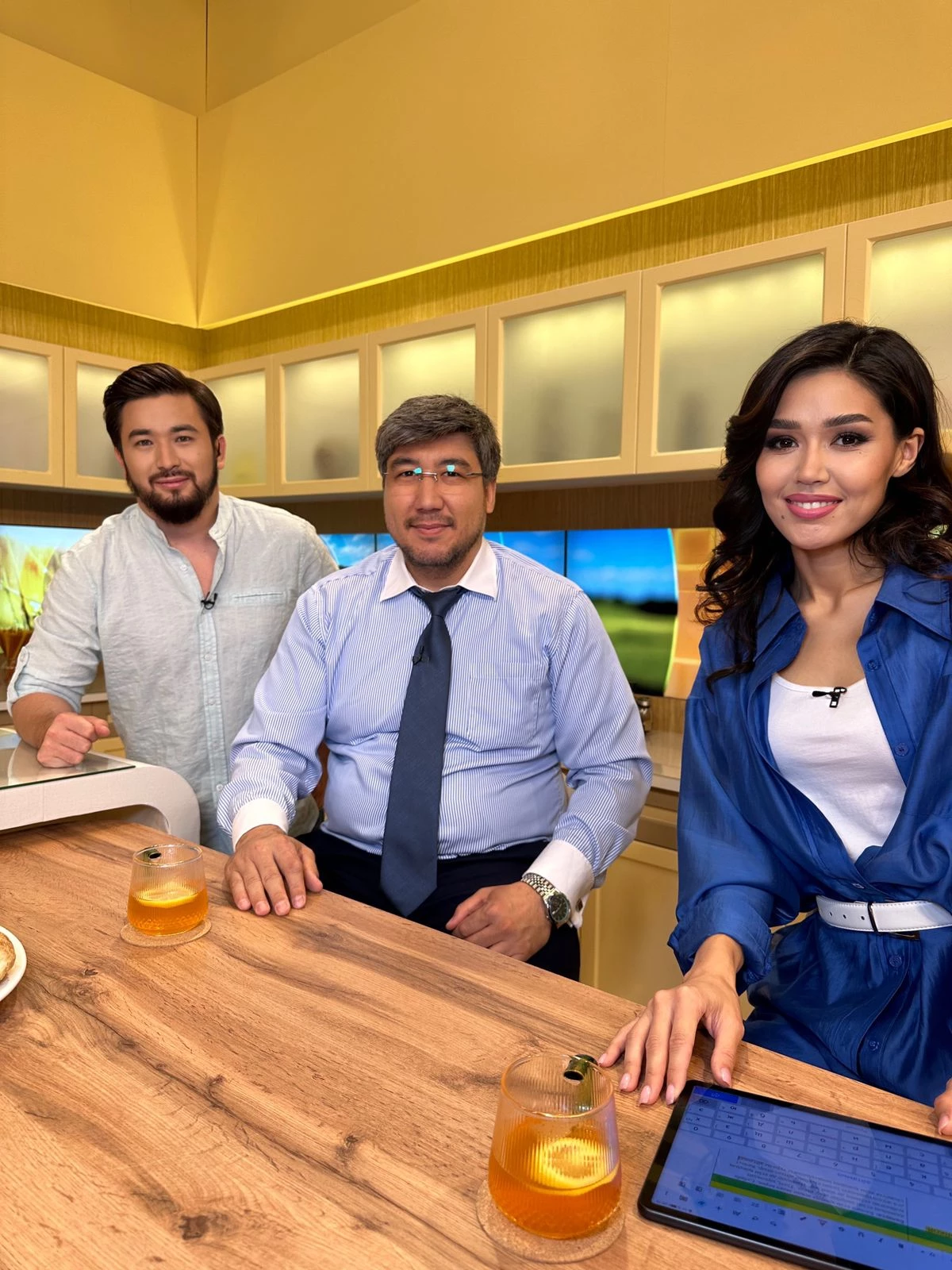
Some resorts do not allow residents to bring food from outside, saying that food cannot be brought to the recreation areas. How true is this? What to do in such a situation? Today we will talk about consumer rights. Lawyer Galymzhan Sarzhanov will answer the questions of great social importance that concern each of us. # vacation # Consumer #Law first channel Eurasia
https://youtu.be/nYa0W8tU6_M
- How legal is the claim that you cannot enter the recreation area with your own food?
- Where to complain if it is illegal?
- How legal is it to rummage through a person's personal bag in places of entertainment, public places, recreation areas and even in stores?
- Where to complain if it is illegal?
- For services in cafes, restaurants, cafes, 10% of visitors are deducted. But would he have the right to demand the same money from us if the reward was not given to the waiter who served?
- In what cases can you not pay 10% of the service?
How do recreation areas put pressure on consumer rights?
It was mentioned in the Committee for Consumer Protection of the Ministry of trade of the Republic of Kazakhstan.
On the eve of the summer holidays and the holiday season, the committee is often approached with questions about the requirements declared by the recreation areas, which prohibit the consumer from entering its territory with his own food and drinks.
The head of the Department of state policy formation of the committee Ramazan Barenov informs: "any drinks and food purchased legally are the personal property of the consumer and cannot be restricted by anyone (Parts 1 and 3 of Article 26 of the Constitution of the Republic of Kazakhstan)".
Everyone has the right to freely enter the recreation area with food and drinks if they buy a ticket or pay for entry into its territory, since this is the form of the concluded contract (article 394 of the Civil Code of the Republic of Kazakhstan).
In addition, article 8-1 of the law on the protection of Consumer Rights, Article 2-3) TT. the corresponding consumer is not allowed to be denied access to the recreation area due to the presence of food and drink in it, since this action is to force the consumer to additionally purchase food and drinks in its territory.
Such restrictions, whether oral or written, are not valid, as they are spelled out in the above article of the law.
Article 24 of the law 3) TT. accordingly, the entrepreneur is obliged to provide the consumer with free access to the territory of the recreation area with all available and legally purchased property, if the items do not violate the moral foundations, etc., especially if such goods are sold on the territory of the recreation area, such a ban is not allowed.
In the presence of a component of the described offense, the consumer can apply directly to the territorial Department of the WKDA for bringing an unscrupulous entrepreneur to justice under Part 2 of Article 163 of the Administrative Code, according to which a fine from 200 MCI to 1500 MCI is provided, or apply to the territorial SPD of the SIM for advice and legal assistance as an intersectoral coordinator in the field of consumer protection on this issue.
In addition, it is important to note that the ban on the use of food and drinks purchased by consumers from other entrepreneurs is an anti-competitive action of the recreation area (Article 177 of the entrepreneurial Code of the Republic of Kazakhstan, Article 2, Article 6) and 8) TT. ).
"It should be noted that currently the committee for Consumer Protection of the SIM of the Republic of Kazakhstan is working to supplement the sanction of the Administrative Code for contractual (oral or written) claims that violate or oppress consumers' rights in order to directly bring unscrupulous entrepreneurs to administrative responsibility, " he added.
Many restaurants and cafes include a service price of 10 percent in the customer's check. How legal is it and is it possible to refuse to pay it?
"According to the procedure of Standardization, Metrology and certification of the Republic of Kazakhstan, that is, according to GOST 30389-2013, an institution (restaurant, cafe, etc.) cannot charge an additional fee for the provision of services. Because in a cafe and restaurant, the provision of waiter services to customers (10 percent) is a prerequisite for this category of catering facilities. Thus, charging personal service fees through interest is a situation that violates consumer rights",
The lawyer warned that if the institution says in advance that it will charge an additional fee for the provision of services, it will not be considered illegal.
"If the customer who comes to eat is indicated on the menu that 10 percent will be charged, or the waiter verbally warns, this situation will not be illegal, that is, it must be notified in advance. If not warned, then the consumer has the right to refuse to pay additional interest for the provision of services. An additional consumer can defend his rights to the "Consumer Protection Organization" or through the court",
2) 10% fee for restaurant service. Is it legal?
Recently, the question "is it legal to charge 10% for service when eating in cafes, restaurants?"I gave an interview to the national TV channel of Kazakhstan.
While a number of lawyers are of the opinion that "this is illegal", I am one of those lawyers who say that "this act is legal." Why? Let me try to justify my point of view.
According to subparagraph 2) of Paragraph 1 of Article 25 of the law" on protection of consumer rights", the service provider is obliged to provide the consumer with all information about the types, features of the services provided.
The fact that cafes and restaurants charge 10% for the service, including the price of food, is usually warned in advance in the menu (menu), that is, the restaurant will tell you in advance about the type of service provided, its features before ordering. In the language of the law, a public agreement (public dogovor) has been concluded between you and the restaurant. In a public contract, all customers who receive the same service are provided with the service at a fixed price (fixed price). Therefore, this is a sign that you have accepted the terms of the contract, that you have agreed with this service. In case of disagreement with the mentioned 10%, you have the right to choose: you can go and eat from another place (or eat at home), where you will not receive 10% for the service.
However, you have the right to dispute if they do not warn you in advance that they will receive 10% for the service and bring you 10% on top of the dish on the account after the service has been served. After all, the service provider had to warn in advance about the service provided, what it includes.
In accordance with subparagraph 3) of Paragraph 2 of Article 8-1 of the law" on protection of consumer rights", it is prohibited to establish additional obligations imposed by the seller for paid services (optional obligation). According to this norm, this is an additional imposed service, so if you consider 10% illegal, in accordance with Article 25 of the above law, the service provider did not oblige you to this service, warned you in advance, did not hide it. If you are against – you have the right not to accept.
In conclusion, there is no direct prohibition in the law to add 10% to the service on top when eating in a cafe or restaurant. For this reason, there is reason to consider this action legal.
Attention!
Law and Law Law Law draws your attention to the fact that this document is basic and does not always meet the requirements of a particular situation. Our lawyers are ready to assist you in legal advice, drawing up any legal document suitable for your situation.
For more information, please contact a Lawyer / Attorney by phone: +7 (708) 971-78-58; +7 (700) 978 5755, +7 (700) 978 5085.
Attorney at Law Almaty Lawyer Legal Services Legal Advice Civil Criminal Administrative Cases Disputes Protection Arbitration Law Firm Kazakhstan Law Office Court Cases